
Mike Prenesti, The Mortgage Jedi
16 years helping Las Vegas homebuyers find the right loan. NMLS #1033445.
Your credit score has a direct impact on the interest rate you'll be offered, and over a 30-year loan, even a small rate difference adds up to tens of thousands of dollars. So it's worth knowing what's actually true and what's just myth.
Here are five of the most common credit myths I hear from clients.
Myth 1: Checking your own credit hurts your score
It doesn't. When you check your own credit, it's a "soft inquiry" and has zero effect on your score. You should check it regularly. The only inquiries that ding your score are "hard inquiries" from applying for new credit, and even those are minor and temporary.
Myth 2: Closing old credit cards helps your score
Usually the opposite. Closing a card reduces your total available credit, which can raise your credit utilization ratio (how much of your available credit you're using). It can also shorten your average account age. Both can lower your score. If a card has no annual fee, it's often better to keep it open.
Myth 3: You need to carry a balance to build credit
False. You don't need to pay interest to build credit. Using your card and paying it off in full every month builds excellent credit. Carrying a balance just costs you money.
Myth 4: A higher income means a higher credit score
Income isn't part of your credit score at all. Your score is based on payment history, amounts owed, length of credit history, new credit, and credit mix. Plenty of high earners have mediocre scores, and plenty of modest earners have excellent ones.
Myth 5: You only have one credit score
You actually have many. Different bureaus (Equifax, Experian, TransUnion) and different scoring models (FICO, VantageScore) can produce different numbers. Mortgage lenders typically use specific FICO models that may differ from the free score you see in an app, so don't be surprised if the number I quote you isn't identical.
The Bottom Line
Small, consistent habits (paying on time, keeping balances low, and leaving old accounts open) do more for your score than any quick trick. And if your score isn't where you want it yet, that's okay. I help clients build a plan to improve it over time.
Book a free consultation and let's look at where you stand and what we can do about it.
Have questions about your situation?
Let's talk it through. No pressure, no obligation.
Book a Free ConsultationRelated Posts

Renting vs. Buying in Las Vegas Right Now: What Each One Really Costs
At today's median price, owning costs more per month than renting a similar home. Here is the full math, what each path builds, and how long you need to stay.

Mortgage Broker vs. Bank: What Actually Wins You the Better Loan
A bank can only sell you what's on its own shelf. A broker shops your file across dozens of lenders to find the one that actually says yes, and says yes on better terms. Here's what that difference is worth.
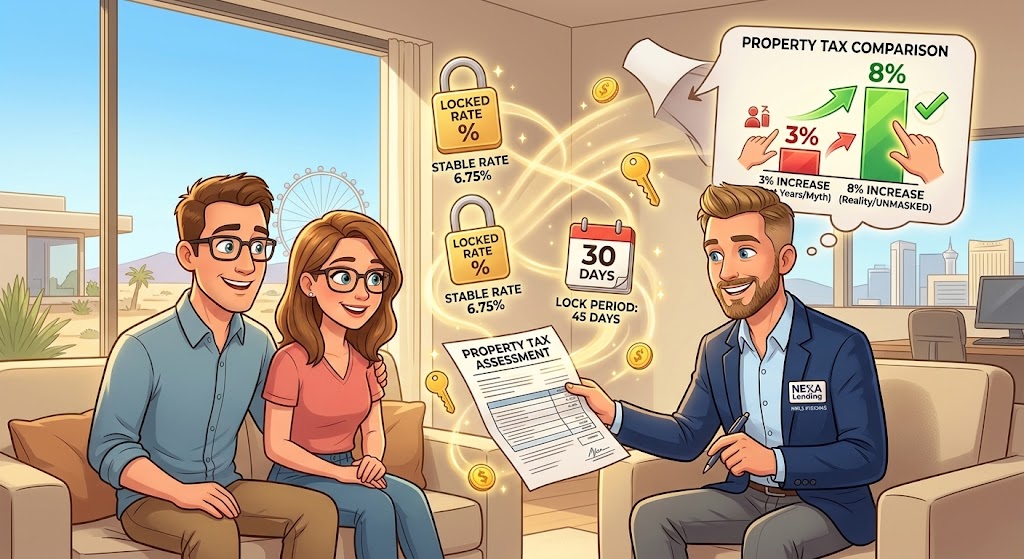
Nevada Property Taxes: What New Homeowners Actually Pay (And the Filing Mistake That Costs Thousands)
Nevada has some of the lowest property tax rates in the country, but one unfiled form can bump your annual increase cap from 3% to 8%. Here is how the bill works, what it adds to your payment, and what to file after you close.