
Mike Prenesti, The Mortgage Jedi
16 years helping Las Vegas homebuyers find the right loan. NMLS #1033445.
DSCR stands for Debt Service Coverage Ratio. It's how the lender decides whether a rental property can qualify for a loan, based on the property's cash flow, not your personal income.
For a lot of real estate investors, this is a game changer. If you've ever been told "your tax returns don't show enough income" even though your rentals are clearly cash flowing, this is the loan that solves that problem.
How the Ratio Works
The math is simple. DSCR is the property's monthly rental income divided by its monthly debt obligation (principal, interest, taxes, insurance, and any HOA dues).
- DSCR of 1.0 means the rent exactly covers the payment.
- DSCR above 1.0 means the property cash flows.
- DSCR below 1.0 means the property runs at a shortfall.
Most lenders want to see a DSCR of 1.0 or higher, though some programs allow ratios below 1.0 with a larger down payment.
Why Investors Love DSCR Loans
- No personal income verification. No W-2s, no tax returns, no pay stubs.
- No limit on the number of properties. Conventional financing caps you at around 10 financed properties. DSCR lenders generally don't.
- Close in an LLC. Great for liability protection and portfolio organization.
- Fast and streamlined. Less documentation means a smoother process.
What You'll Typically Need
- A down payment in the 20-25% range
- A credit score around 620+
- Cash reserves (usually a few months of payments)
- An appraisal that includes a market rent analysis
The Trade-Offs
DSCR loans usually carry slightly higher interest rates than conventional loans, because the lender is taking on a bit more risk. But for many investors, the ability to qualify at all, and to keep buying without income caps, is more than worth it.
Is a DSCR Loan Right for You?
If you're building a rental portfolio, self-employed with complex returns, or simply want financing that's tied to the property instead of your personal income, a DSCR loan is worth a serious look.
Book a free consultation and I'll help you figure out whether your next property qualifies, and what terms you can expect.
Have questions about your situation?
Let's talk it through. No pressure, no obligation.
Book a Free ConsultationRelated Posts
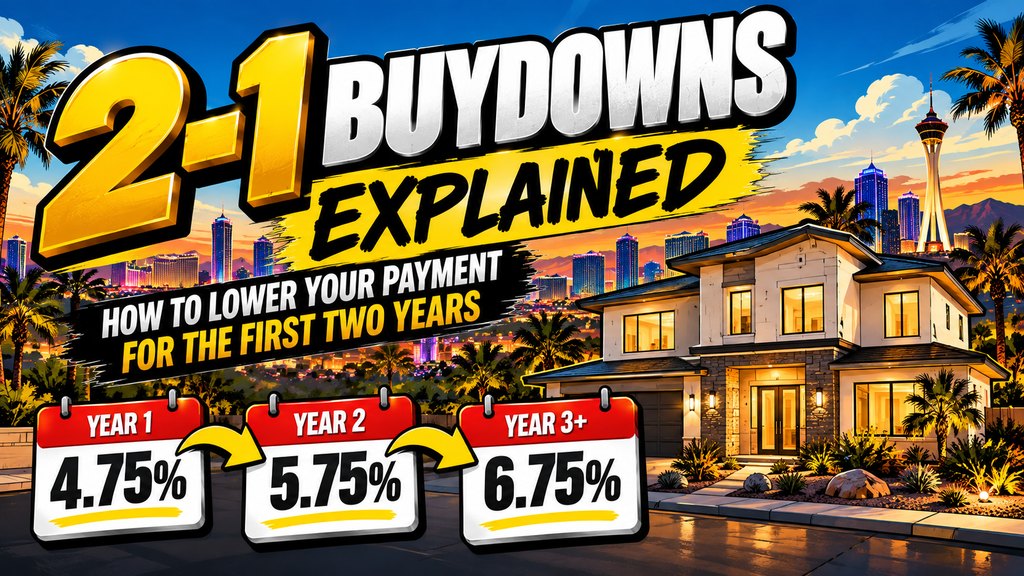
2-1 Buydowns Explained: How to Lower Your Payment for the First Two Years
A 2-1 buydown cuts your rate by 2 points in year one and 1 point in year two. Here is how it works, who pays for it, and when it actually makes sense.

Which Loan Is Best for a $2 Million Home in Las Vegas? Jumbo Options Compared
Buying a $2 million home in Las Vegas almost always means a jumbo loan. Here are the main options, who each one fits, and what lenders look at.

Non-QM vs Conventional Loans: How to Choose the Right Path
Conventional loans follow standard guidelines. Non-QM loans are built for borrowers who do not fit them. Here is how to tell which one fits you, and why conventional usually comes first.