Mike Prenesti, The Mortgage Jedi
16 years helping Las Vegas homebuyers find the right loan. NMLS #1033445.
With rates sitting in the mid 6% range, a lot of buyers are asking the same question. Is there a way to ease into the payment instead of taking the full hit on day one?
There is. It is called a 2-1 buydown, and it is one of the most useful tools in this market when it is set up the right way.
What a 2-1 Buydown Actually Is
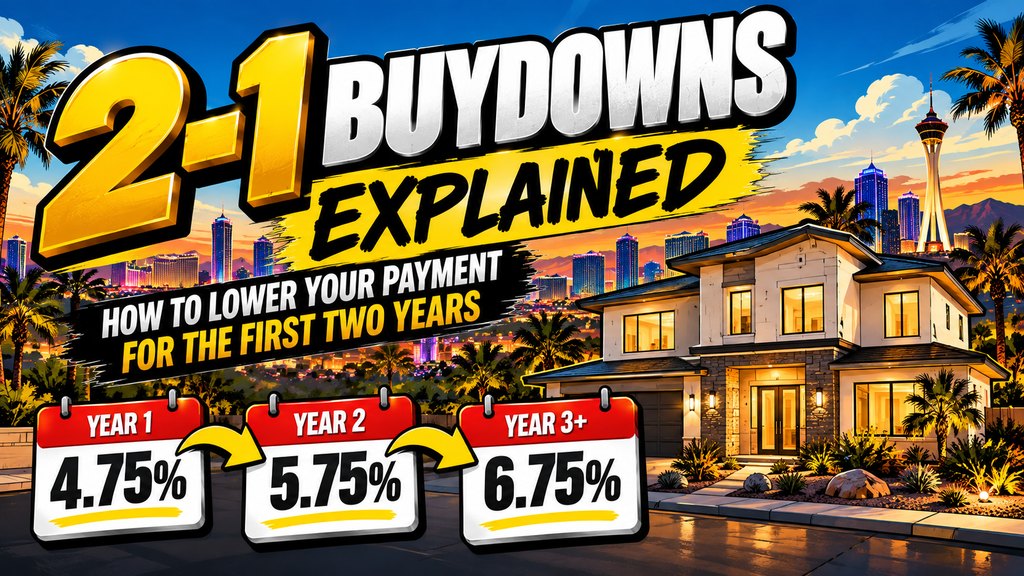
A 2-1 buydown is a temporary rate reduction. Your interest rate is 2 percentage points lower in year one, 1 percentage point lower in year two, and then it settles at the full rate for the rest of the loan.
Your actual loan rate, called the note rate, does not change. The buydown lowers what you pay for the first 24 months.
A Real Example With Real Numbers
Say you borrow $400,000 on a 30-year fixed loan with a note rate of 6.75%. These numbers are for illustration only and are not a rate quote.
Year one, you pay as if the rate were 4.75%. Principal and interest comes to roughly $2,087 a month.
Year two, you pay as if the rate were 5.75%. That comes to roughly $2,334 a month.
From year three on, you pay the full 6.75% rate. That is roughly $2,594 a month.
Compared to the full payment, you save about $500 a month in year one and about $260 a month in year two. Over the two years, that adds up to roughly $9,200.
Who Pays for It
This is the part buyers miss. A buydown is not free money. Someone funds the difference, and that money is set aside in an escrow account to cover the gap each month while you pay the lower amount.
Here is where the funding usually comes from.
The seller. In a market with more inventory, sellers are more willing to negotiate. A seller concession can pay for a buydown, and that is often a smart place to point it.
The builder. New construction is a big part of this valley, and builders often offer buydowns as an incentive to move homes. If you are looking at new construction, ask what the builder will contribute and whether that applies to your loan.
The lender or the buyer. In some cases the cost is built into the loan through a lender credit, or the buyer pays it at closing.
You Still Qualify at the Full Rate
Here is the detail that matters most. On most programs, you qualify based on the full note rate, not the reduced rate you pay in years one and two.
A buydown makes the early payments easier to carry. It does not help you qualify for a bigger loan. If your debt-to-income ratio is tight, a buydown will not fix that on its own.
When a 2-1 Buydown Makes Sense
A buydown fits a buyer who expects their income to grow, whether from a raise, a bonus structure, or a spouse returning to work. Lower payments early give you room to settle in, build reserves, and handle the costs that come with a new home.
It also fits a buyer who wants a bit of breathing room in the first two years while keeping the option to refinance if rates improve later. Treat a refinance as a bonus, not the plan. Nobody can promise where rates will go.
When It May Not Be the Best Use of the Money
If a seller is offering a fixed amount toward your costs, a 2-1 buydown is only one way to use it. The same dollars could go toward closing costs, or toward a permanent rate buydown that lowers your rate for the full life of the loan.
The right choice depends on how long you plan to stay in the home and how much cash you need at closing. If you plan to keep the loan for many years, a permanent buydown can win. If you want the lowest possible payment while you get settled, the 2-1 can win.
Questions to Ask Before You Choose
Ask exactly how the buydown is funded and who is paying for it. Ask what happens to any unused buydown funds if you refinance or sell early, since the terms vary. And ask whether your specific loan program and occupancy type allow a temporary buydown, because the rules differ by program.
Let's Compare the Options Side by Side
A 2-1 buydown can be a smart move, but only when the numbers support it. Let's run your purchase price, your rate, and your seller or builder contribution, and compare a 2-1 buydown against a permanent buydown and against using the credit for closing costs.
Get started here or book a call and I will show you which option puts the most money back in your pocket.
Have questions about your situation?
Let's talk it through. No pressure, no obligation.
Book a Free ConsultationRelated Posts

DSCR Loans Explained: How Real Estate Investors Qualify Without Tax Returns
If your tax returns show losses but your properties cash flow, a DSCR loan might be exactly what you need. Here's how it works.

Escrow Accounts Explained: Why Your Mortgage Payment Can Change
Your principal and interest stay put on a fixed-rate loan, but your total payment can still rise. The reason is usually your escrow account. Here is how it works.

What California Investors Should Know Before Buying Rental Property in Las Vegas
Bay Area cap rates are barely clearing loan rates, and Las Vegas keeps showing up on California investors' radar. Here is what actually changes when you buy here.